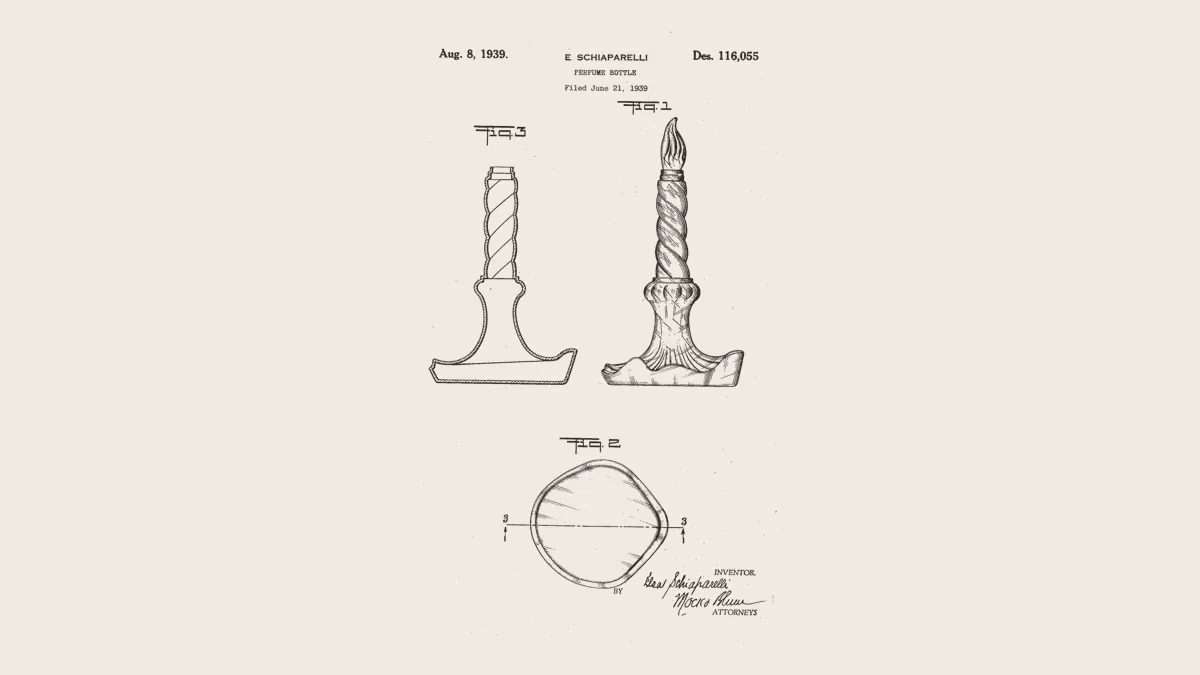
Many inventors think of patents only in terms of how something works. Yet the appearance of a product, such as the shape of a bottle, the contour of a chair or the look of an on-screen icon, can be just as valuable commercially. In the United States, that appearance can be protected with a design patent.
What a design patent protects
Under 35 U.S.C. 171, a design patent may be granted for a new, original and ornamental design for an article of manufacture. The USPTO describes a design as the visual ornamental characteristics embodied in, or applied to, an article. In practice, a design can relate to:
- The configuration or shape of an article, such as the silhouette of a bottle or a piece of furniture.
- Surface ornamentation applied to an article, such as a pattern molded into a product.
- A combination of shape and surface ornamentation.
A design patent protects appearance only. It does not cover how the product functions, the materials it is made from or the method used to make it. If a feature's form is dictated purely by its function, it is generally not protectable as an ornamental design. The USPTO's Design Patent Application Guide is the best official starting point for the basic requirements.
Design patents vs. utility patents
The two types of patents protect different things and follow different rules. The USPTO summarizes the key differences in MPEP 1502, including:
- What is protected. A utility patent protects the way an article is used and works; a design patent protects the way it looks.
- Claims. A design patent application includes only a single claim, while a utility application can include many claims.
- Term. A design patent filed on or after May 13, 2015 lasts 15 years from the date of grant. A utility patent generally lasts 20 years from its earliest effective nonprovisional filing date.
- Maintenance fees. Utility patents require periodic maintenance fees to stay in force; design patents do not.
- Provisional applications. A design application cannot claim the benefit of a provisional application. If you are weighing a provisional filing for a utility invention, see Provisional vs. Nonprovisional Patent Applications.
- Foreign priority. The period for claiming priority to a foreign application is six months for designs, compared with twelve months for utility applications.
A single product can be protected by both types at once.
Requirements for a design patent
To be patentable, a design must meet several conditions:
- Novelty. The design must not be identical to a design that is already known in the prior art.
- Non-obviousness. The design must not be an obvious variation of existing designs to a designer of ordinary skill in the field.
- Ornamentality. The design must be ornamental rather than purely functional.
- An article of manufacture. The design must be embodied in or applied to an article. The USPTO's guidance addresses designs for computer-generated icons and interfaces, which are claimed as shown on a display screen or other article.
Timing matters for designs just as it does for utility inventions. Public disclosures, sales and offers for sale can create prior art, and U.S. grace periods are limited, while many other countries require absolute novelty. Speak with a patent professional before you show a new design publicly. Our guide on how to do a patent search explains why image and classification searching are especially important for designs, where words describe appearance poorly.
What goes into a design patent application
Because a design patent protects appearance, the drawings are the heart of the application. The claim itself is short, typically in a form such as "The ornamental design for a [article], as shown and described." The scope of protection is defined by what the drawings show.
A complete application generally includes:
- A preamble and title that identify the article in which the design is embodied.
- A brief description of each figure in the drawings.
- A single claim in the required format.
- Drawings or photographs showing the design clearly, usually from several views, such as front, rear, sides, top, bottom and a perspective view.
- An oath or declaration by the inventor.
- The required filing, search and examination fees, which are listed on the USPTO fee schedule and vary with entity size. Current amounts are covered in How Much Does a Patent Cost?
Solid lines and broken lines
Drawing conventions are critical. Solid lines show the claimed design. Broken lines are commonly used to show environmental structure or portions of the article that form no part of the claimed design. Choosing which features to show in solid lines, and which to disclaim with broken lines, has a direct effect on how broad the protection will be. Every view must also be consistent with the others, because new matter generally cannot be added after filing to fix errors.
The examination process
After filing, a design application is assigned to an examiner who reviews the formal requirements, the drawings and the prior art. Like utility applications, design applications can receive Office actions that raise objections or rejections. A thoughtful response can often resolve these issues, as explained in our article on responding to a USPTO Office action. If the application is allowed, the applicant pays the issue fee and the design patent is granted.
Protecting designs outside the United States
A U.S. design patent provides rights only in the United States. To protect a design abroad, an applicant must seek protection in each country or region of interest. One option is an international design application under the Hague Agreement Concerning the International Registration of Industrial Designs, which allows a single application to designate multiple member countries and intergovernmental organizations. The USPTO explains the system on its Hague Agreement page. Because the foreign priority period for designs is only six months, international planning should begin early.
Enforcing and licensing a design patent
A design patent gives its owner the right to exclude others from making, using, selling, offering for sale or importing articles that embody the patented design in the United States. Infringement of a design patent is generally evaluated by asking whether an ordinary observer, familiar with the prior art, would find the accused design substantially the same as the patented design. U.S. law also provides a specific remedy for design patent infringement under 35 U.S.C. 289, which can allow recovery of the infringer's total profit from the article of manufacture.
Design patents can also be licensed or sold. Our guides on how to license your patent and how to sell or monetize a patent cover these options in more detail.
When does a design patent make sense?
A design patent is worth considering when:
- The appearance of the product is a meaningful reason customers buy it.
- Competitors are likely to copy the look of the product rather than its underlying technology.
- The product's function is already known, but its new shape or ornamentation is not.
A design patent may be less useful when appearance is dictated by function, when the look will change quickly with each product cycle or when the real competitive value lies in how the product works. In that last case, a utility application, discussed in How to Patent an Idea, is usually the better focus. Many companies use both.
How New England Intellectual Property can help
New England Intellectual Property assists inventors and companies across the United States with patent preparation and prosecution, including strategy for combining design and utility protection, coordinating professional drawings and responding to examiner rejections. Learn more about Richard A. Baker, Jr., CLP, or request a free quote to discuss your design.
Frequently asked questions
How long does a U.S. design patent last?
A design patent filed on or after May 13, 2015 lasts 15 years from the date it is granted. Design patents filed before that date have a 14-year term. No maintenance fees are required to keep a design patent in force.
Can I file a provisional application for a design?
No. A design application cannot claim the benefit of a provisional application. Provisional applications are available only for utility inventions, so a design application is filed as a complete nonprovisional application.
Can a product have both a design patent and a utility patent?
Yes. A utility patent can protect how a product works while a design patent protects how it looks. Using both can give broader protection for the same product.
Can software screens or icons be protected by a design patent?
The USPTO's guidance addresses designs for computer-generated icons and interfaces. They are claimed as shown on a display screen or other article of manufacture, and they must meet the same requirements of novelty, non-obviousness and ornamentality as any other design.
Related articles
- How to Patent an Idea: A Step-by-Step Guide for Inventors
- How Much Does a Patent Cost in 2026? A Realistic Budget Guide
- Provisional vs. Nonprovisional Patent Applications: Which Should You File?
Learn more about Richard A. Baker, Jr., CLP and our patent services.
Need patent help?
New England Intellectual Property assists inventors and companies with patent preparation and prosecution, examiner calls, patent monetization and expert witness services. Request a free quote or call 978-363-1700.